The biggest difference between a JioPhone Next and a regular budget Android phone is flexibility. The JioPhone Next is built around Jio’s network and runs Pragati OS, a light system based on Android Go that Jio made with Google. Most other budget Android phones work with any operator and run a fuller version of Android. Which one suits you depends on the apps you use, the network you want and how hard you push your phone.
This comparison leaves out prices, which change often. Instead it looks at software, SIM rules, network support, updates and app performance, so you can judge which phone fits your needs. When you compare a specific model, check its official specification sheet, because budget phones vary a lot.
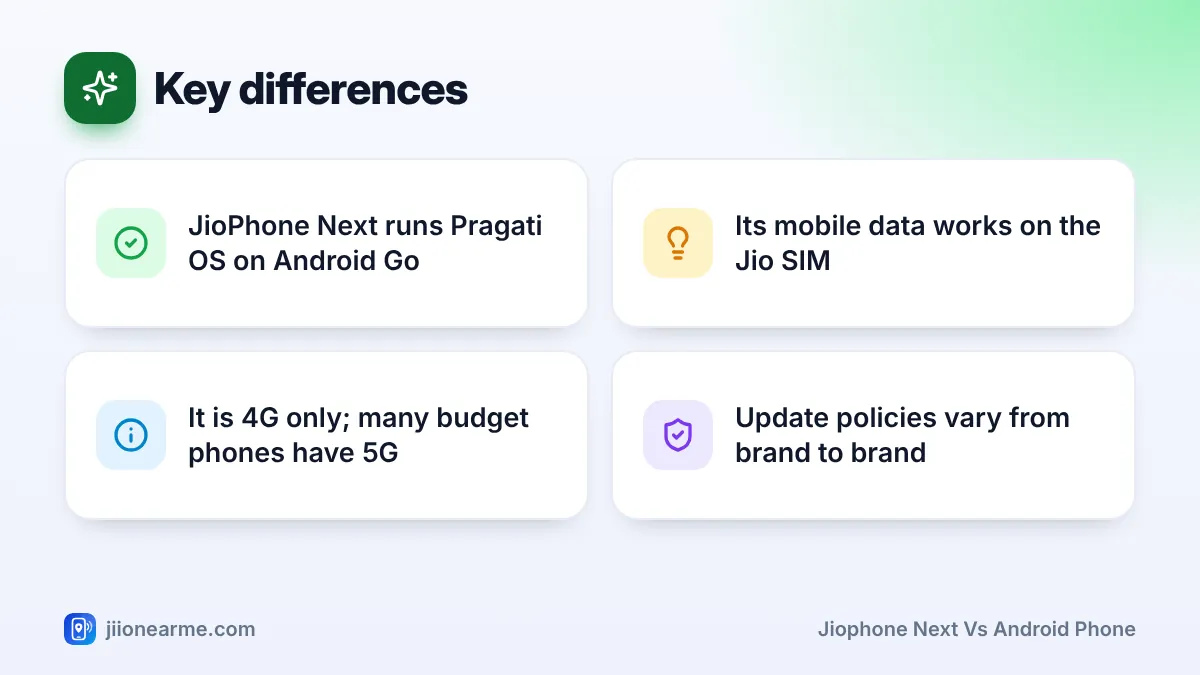
- JioPhone Next runs Pragati OS on Android Go edition, while most budget phones run full Android with a brand’s design.
- JioPhone Next is tied to Jio for mobile data, while most budget phones accept any operator.
- JioPhone Next is a 4G phone, and many newer budget phones support 5G.
- Choose JioPhone Next for simple everyday use on Jio, and a regular budget phone for more apps, 5G or operator freedom.
JioPhone Next vs Android Phone: Side-by-Side Table
| Area | JioPhone Next | Typical budget Android phone |
|---|---|---|
| Software | Pragati OS, based on Android Go edition | Full Android (sometimes Go) with the brand’s design |
| App store | Google Play Store | Google Play Store |
| SIM and data | Built around Jio, with mobile data on the Jio SIM | Usually any operator in either slot |
| Network | 4G | 4G or 5G, depending on model |
| Memory | Modest, suited to light apps | Varies, and many offer more |
| Updates | From Jio and Google | From the phone brand, per its policy |
| Built-in extras | Read Aloud, Translate, Jio apps | Brand apps, with Google features varying |
| Service | Jio Stores and authorised centres | Brand service centres |
The sections below explain what these differences mean in daily use.
Software: Pragati OS vs Standard Android
Pragati OS is Android underneath, so it uses the Play Store, a Google account and familiar settings. Because it’s based on Android Go, it favours lighter apps and manages background apps strictly to keep the phone responsive on modest hardware.
Most budget Android phones run full Android with the maker’s own design layer on top. This often brings more settings and features, but sometimes also more pre-installed apps and promotional notifications. A few very basic phones from other brands run Android Go as well, so check the spec sheet.
SIM Rules and Network Support
This is where the two differ most.
- JioPhone Next: built around Jio. You need an active Jio SIM, and mobile data works on it. If you want internet from another operator, it isn’t the right phone.
- Budget Android phones: usually accept a SIM from any Indian operator in either slot, so you can switch networks or port your number freely.
The JioPhone Next is also a 4G phone. Many newer budget Android phones support 5G, so if Jio True 5G or another 5G network covers your area and you want faster speeds, a 5G phone makes more sense.
If you might move your number to another operator in future, a phone that accepts any SIM gives you more freedom. Check the current rules for the JioPhone Next on jio.com before deciding.
App Performance and Daily Use
The JioPhone Next handles everyday apps well: calls, WhatsApp, YouTube, UPI, MyJio and light browsing. Because its memory is modest, it can feel slow if you keep many apps open, and heavy games may not be offered for it.
Budget Android phones vary widely, but many come with more memory and faster chips. That helps if you:
- Play graphics-heavy games.
- Edit photos or videos.
- Keep many apps open and switch between them often.
- Use work apps, such as video meetings, for long hours.
If your day is mostly calls, chats, videos and payments, the JioPhone Next covers it. If you push your phone hard, a stronger budget phone will feel smoother.
Updates and Long-Term Support
Pragati OS updates come over the air from Jio and Google and include security patches and fixes. Don’t assume major Android version upgrades, though.
Other brands each have their own update policy. Some budget models come with a promise of several years of security updates, while others get very few. Before buying any phone, look for the brand’s official update promise for that model, and check the security update date on the demo unit under Settings > About phone.
On a store demo unit, note the Android security update date. A recent date suggests the brand is still updating that model, while a very old one is a warning sign.
Which Phone Should You Choose?
Work through these steps before you decide:
- List the apps you use every day and check each one in the Play Store on a demo unit.
- Decide whether you need mobile data from an operator other than Jio.
- Find out whether 5G coverage reaches your home and workplace.
- Compare the official update promises for the models you’re considering.
- Hold and try both phones in a store before you buy.

JioPhone Next suits you if
- You already use Jio and plan to stay.
- You’re moving from a keypad phone and want a simple first smartphone.
- You value Read Aloud, Translate and Indian language support.
- Your use is mainly calls, WhatsApp, YouTube and UPI.
A regular budget Android phone suits you if
- You want the freedom to use any operator’s data.
- You want 5G.
- You play games, multitask heavily or need specific work apps.
- You want a wider choice of cameras, screens and battery sizes.
Frequently Asked Questions
Can JioPhone Next run the same apps as other Android phones?
It runs most apps from the Play Store, but some heavy apps and games may not be offered for it or may run slowly. Try your important apps on a demo unit first.
Can I use an Airtel or Vi SIM in JioPhone Next?
The phone is built around Jio, and its mobile data works on the Jio SIM. If you need another operator’s data, a regular budget Android phone is the safer choice.
Do other Android phones have read aloud and translate features?
Many Android phones offer similar reading and translation tools through Google’s apps or accessibility settings, though the features and how you open them vary. On the JioPhone Next, they’re built into the phone’s Assistant.
Which phone gets software updates for longer?
It depends on the brand and model. Compare official update promises and check the current security update date before you buy.
Is JioPhone Next a good choice for seniors?
It suits many seniors who use Jio, thanks to its light software, Indian language support and Read Aloud. Set it up with bigger text and a simple home screen for the best results.
Final Thoughts
Neither phone is better for everyone. The JioPhone Next is a sensible, simple choice for Jio users who need everyday apps and helpful language features. A regular budget Android phone gives you operator freedom, 5G options and headroom for heavier apps. Match the phone to your daily use, and test your key apps before you buy.
JIo Near me is an independent guide and is not affiliated with Reliance Jio. App menus, plans and policies can change – always confirm current details in the official MyJio app or on jio.com. We will never ask for your OTP, PIN or passwords.