Previous balance, payments received, credits and adjustments are the lines on your Jio postpaid bill that connect last month’s bill to this month’s. Together with your current charges, they decide the final amount you have to pay. A credit or adjustment usually means Jio has corrected, waived or refunded something on your account.
Many people panic when they see a previous balance they thought they had paid. In most cases, the payment simply arrived after the bill date. This guide explains each line, with a simple way to check the maths.
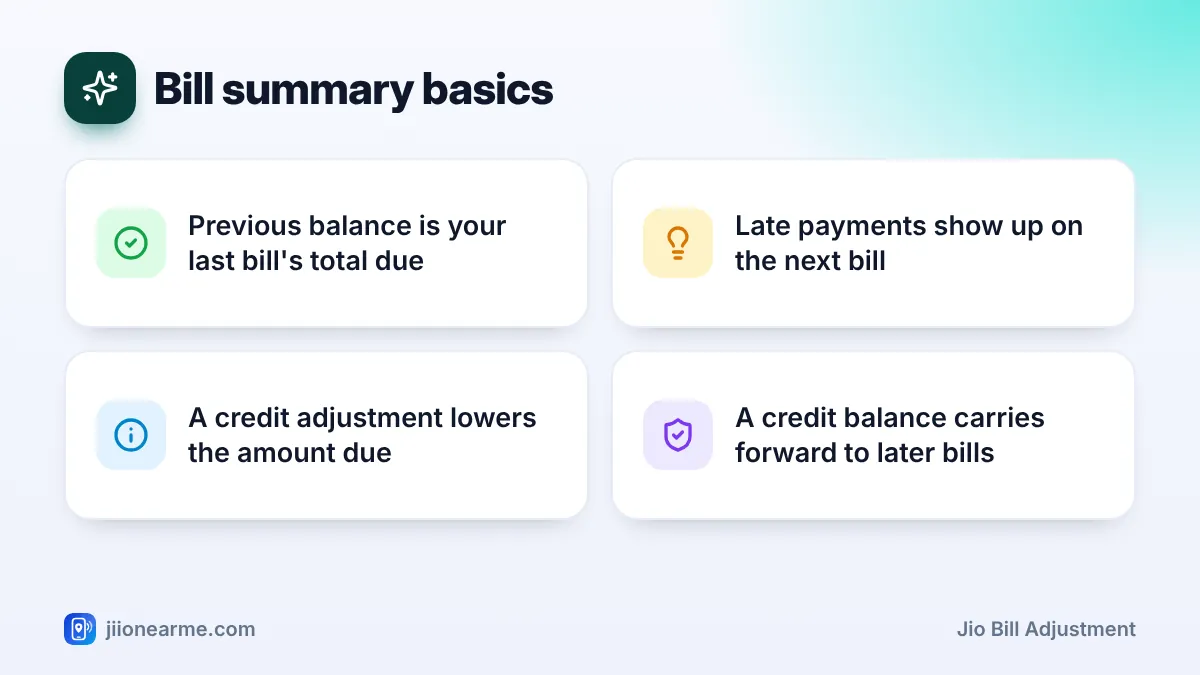
- Amount due is roughly previous balance, minus payments and credits, plus current charges.
- A payment made after the bill date usually appears on the next bill, not the current one.
- A credit adjustment lowers what you owe. A debit adjustment raises it.
- A credit balance is carried forward and used against future bills.
- Contact Jio support before the due date if a payment or promised credit is missing.
How Your Amount Due Is Worked Out
The bill summary is usually at the top of your Jio postpaid bill. It follows a simple flow, even if the exact labels differ.
| Bill line | What it means | Effect on amount due |
|---|---|---|
| Previous balance | Total due on your last bill | Adds |
| Payments received | Payments credited since your last bill | Subtracts |
| Credits or adjustments | Waivers, refunds or corrections | Usually subtracts |
| Current charges | This cycle’s charges, including GST | Adds |
| Amount due | The result of the lines above | Pay by the due date |
So the basic formula is: previous balance − payments − credits + current charges = amount due.
If your bill uses slightly different words, such as Opening balance or Last bill amount, the idea stays the same.
Previous Balance and Payments Received
What previous balance means
Previous balance is the total amount due on your last bill. It is shown so you can see whether that bill has been cleared. It does not mean you are being charged again.
Why a paid bill can still show as previous balance
Jio generates your bill on a fixed bill date. Payments made after that date cannot appear on it. They show up on the next bill under Payments received.
For example, suppose you paid last month’s bill a few days after the new cycle started. The new bill will list last month’s total as previous balance and your payment as payment received. The two cancel out, and you are left with only the current charges.
When payments received looks short
If a payment is missing or shows a smaller amount, check these points:
- Was the payment successful in your bank or UPI app?
- Did you pay for the right Jio number?
- Was the payment made before or after the bill date?
- Did you pay part of the bill through one method and the rest through another?
Keep the transaction reference number from your payment app. Support will ask for it if the payment needs to be traced.
What a Jio Bill Adjustment Means
An adjustment is a correction made to your account outside the normal charges. It can go either way.
Credit adjustments
A credit adjustment reduces what you owe. Common reasons include:
- A wrong charge that was reversed after you raised a complaint.
- A waiver approved by Jio support, such as for a disputed charge.
- A correction after a plan change in the middle of a cycle.
- A refund of an amount that was billed by mistake.
Debit adjustments
A debit adjustment increases what you owe. This can happen if an earlier bill missed a charge, or if a payment you made was later reversed by your bank.
Disputed amounts
If you have raised a dispute, the bill may show the disputed part separately or show a credit once the dispute is resolved. Ask support how your dispute will appear on the bill.
Adjustment lines often include a short description or reference. Read it before calling support. It may already explain what the credit or charge was for.
Credit Balance and a Negative Amount Due
Sometimes your bill shows a negative amount due, or a line marked Credit balance. This means Jio owes you money on the account. It usually happens if you paid more than the bill, paid in advance or received a large credit.
You do not need to pay anything for that bill. The credit is normally used against your next bills. If you close the connection, the remaining credit and any refundable deposit are settled through Jio’s official closure process.
How to Check Credits and Adjustments on Your Bill
Use this routine each month. App labels can differ slightly by version.
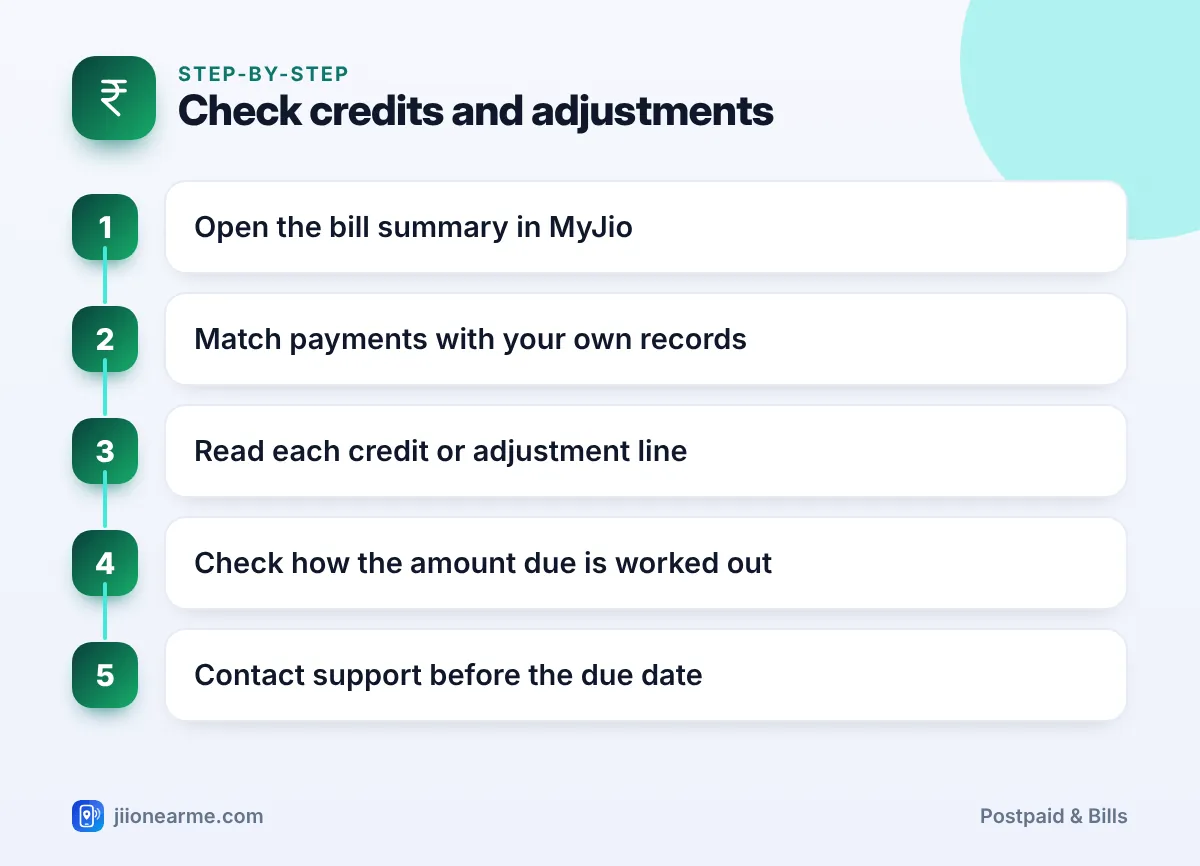
- Open the MyJio app, select your postpaid number and go to the bills section from the home screen or the menu (☰).
- Open the latest bill and find the bill summary.
- Match the previous balance with the total of your last bill.
- Match payments received with your bank or UPI records.
- Read every credit or adjustment line and its description.
- Check the formula. Previous balance minus payments and credits, plus current charges, should equal the amount due.
- Contact support before the due date if anything does not add up.
You can also view bills by signing in on jio.com.
When to Contact Jio About an Adjustment
Get in touch with Jio support if:
- A successful payment is not shown on the bill that should include it.
- A credit or waiver you were promised is missing.
- A debit adjustment appears with no clear reason.
- Your credit balance is not used against a later bill.
Call 199 from your Jio number for queries, or 198 to register a complaint. Keep your bill, payment reference number and any complaint number ready. Raise the issue before the due date so you can avoid late payment charges.
Scammers sometimes call about “refunds” or “bill adjustments” and ask you to share an OTP or install an app. Jio support does not need your OTP to credit your account. If you lose money, call 1930 or report it at cybercrime.gov.in.
Frequently Asked Questions
Why does my bill show a previous balance when I already paid?
Your payment was probably made after the bill date. It will appear as payment received on the next bill and cancel out the previous balance.
What is a credit adjustment on a Jio bill?
It is an amount taken off your bill, usually because of a reversed charge, an approved waiver or a correction. It lowers your amount due.
Can an adjustment increase my bill?
Yes. A debit adjustment adds to your amount due, for example when a missed charge is corrected or a payment is reversed by your bank.
What happens to a credit balance on my account?
It is carried forward and used against your future bills. On closure, any remaining balance is settled through the official closure process.
Should I pay the full amount if I am disputing an adjustment?
Ask Jio support how the disputed part will be handled before the due date. This helps you avoid late payment charges while the issue is checked.
Conclusion
The bill summary is easier to read once you know the formula. Previous balance, minus payments and credits, plus current charges, gives you the amount due.
Each month, match payments with your own records and read every adjustment line. If a payment or credit is missing, contact Jio support on 199 with your payment reference before the due date.
JIo Near me is an independent guide and is not affiliated with Reliance Jio. App menus, plans and policies can change – always confirm current details in the official MyJio app or on jio.com. We will never ask for your OTP, PIN or passwords.