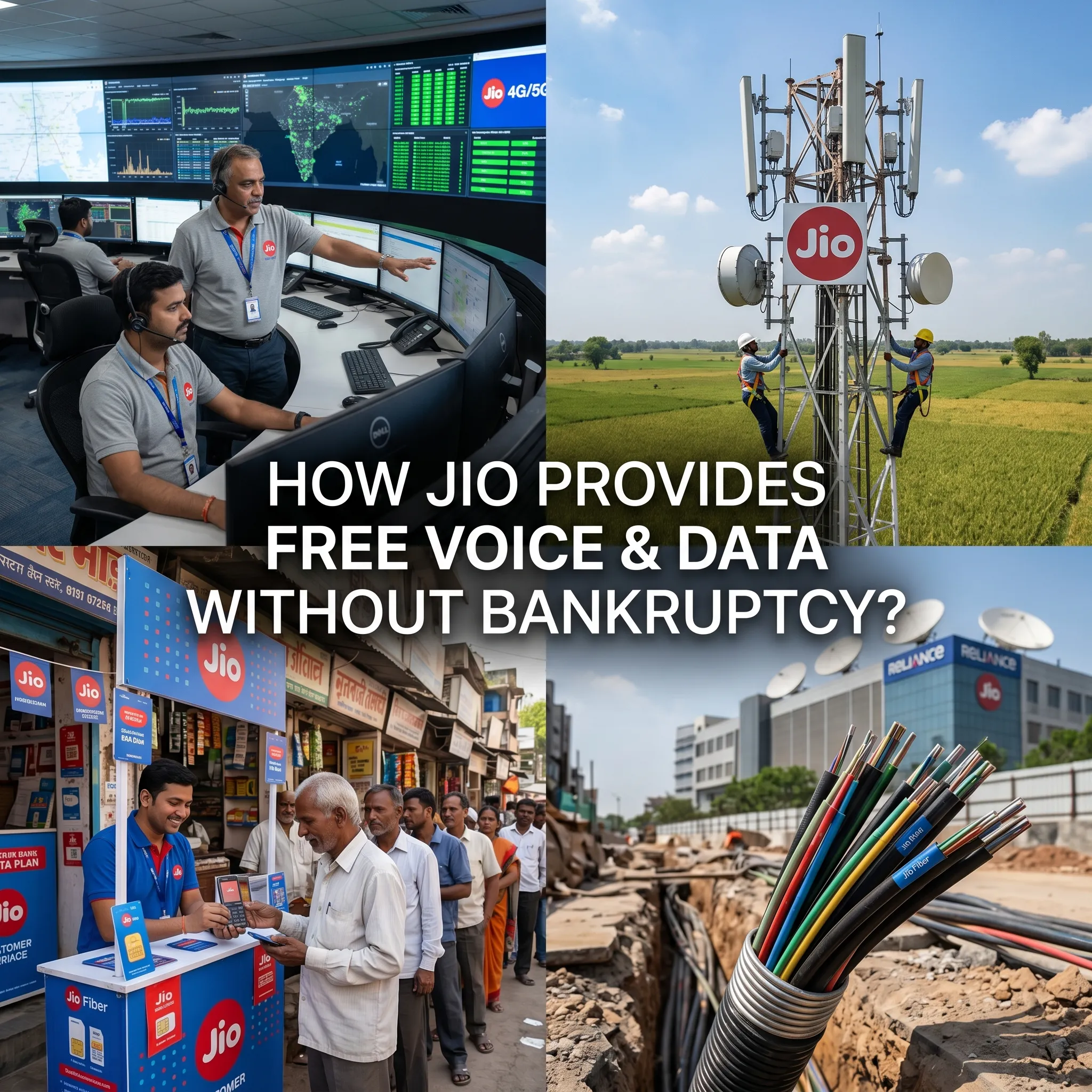
When Reliance Jio launched in 2016, it completely disrupted India’s telecom industry by offering free voice calls and extremely cheap data. Many people still wonder: how can a company provide such low-cost services and still survive, let alone grow into one of the largest telecom operators in the world?
The answer lies in a smart combination of technology, business strategy, and long-term planning. Let’s break it down in a simple way.
1. All-IP Network (No Traditional Calling Cost)
Traditional telecom companies used older circuit-switched networks for voice calls, which were expensive to maintain.
Jio, on the other hand, built a fully IP-based (internet protocol) network from the beginning.
- Voice calls are converted into data packets
- Calls run using VoLTE (Voice over LTE)
- No separate infrastructure for voice
👉 This drastically reduces the cost of providing voice services.
That’s why Jio can offer “free voice calls” — because technically, they are just using data.
2. Data Is the Real Revenue Driver
Even though voice calls are free, Jio earns money through data usage.
- Users recharge for data plans
- Daily data limits encourage regular recharges
- High internet consumption = steady income
India has one of the highest mobile data consumption rates in the world, and Jio benefits heavily from this.
👉 So, voice is free, but data is the real business.
Also read: Can we send voice messages in jio keypad phone?
3. Massive Initial Investment by Mukesh Ambani
Jio didn’t start small. It was backed by huge investments from its parent company, Reliance Industries.
- Billions of dollars invested in infrastructure
- Nationwide 4G network built from scratch
- Long-term vision instead of short-term profit
👉 This allowed Jio to offer free services initially to capture the market.
4. Customer Acquisition Strategy
Jio’s “free offers” were actually a smart marketing move.
- Free SIM cards
- Free data and calls for months (launch period)
- Easy onboarding
This helped Jio gain millions of users quickly.
👉 Once users became dependent on Jio, they continued with paid plans later.
5. Economies of Scale
Jio has over 400 million users. This scale gives huge advantages:
- Cost per user becomes very low
- Infrastructure cost is spread across millions
- Even small recharges generate massive revenue
👉 Example: Even ₹155 from millions of users = huge income.
6. Digital Ecosystem (Beyond Telecom)
Jio is not just a telecom company. It has built a full digital ecosystem:
- JioCinema (OTT platform)
- MyJio (account management)
- JioTV
- Cloud services, fiber broadband, enterprise solutions
👉 These platforms generate additional revenue through ads, subscriptions, and partnerships.
7. Partnerships and Investments
Jio has attracted major global investors:
These investments brought billions of dollars into Jio Platforms.
👉 This financial backing reduces pressure on telecom revenue alone.
8. Low Operational Costs
Jio optimized its operations:
- Modern infrastructure (less maintenance)
- Fewer legacy systems
- Efficient spectrum usage
👉 Lower costs = ability to offer cheaper plans.
9. Bundled Services Increase Value
Jio plans often include:
- Free voice calls
- Data
- OTT subscriptions
- Apps access
👉 This makes users feel they are getting more value, increasing retention and reducing churn.
10. Competitive Pricing Strategy
Jio forced competitors to reduce prices, but it stayed profitable by:
- Keeping margins low but volume high
- Focusing on long-term dominance
- Continuously innovating plans
Does Jio Really Provide “Free” Services?
Not exactly.
- Voice calls are free because they run on data
- Users still pay for data plans
- Revenue comes from scale and ecosystem
👉 So, it’s a smart pricing model, not charity.
Final Thoughts
Jio’s success is not magic — it’s strategy. By using modern technology, focusing on data revenue, leveraging massive investments, and building a digital ecosystem, Jio made “free voice calls” sustainable.
Instead of charging separately for voice, it bundled everything into affordable data plans. This approach not only attracted millions of users but also transformed the entire telecom industry in India.
Also read: If i don’t recharge jio what will happen?
