The main difference between Jio prepaid and postpaid is when you pay. On prepaid, you recharge first and use the benefits until the plan’s validity ends. On postpaid, called JioPlus, you use services through the month and then pay a bill.
That one difference affects many other things, such as validity, deposits, credit limits and how easy it is to control spending. This guide compares Jio prepaid vs postpaid point by point, without quoting prices, so you can pick the option that suits your habits.
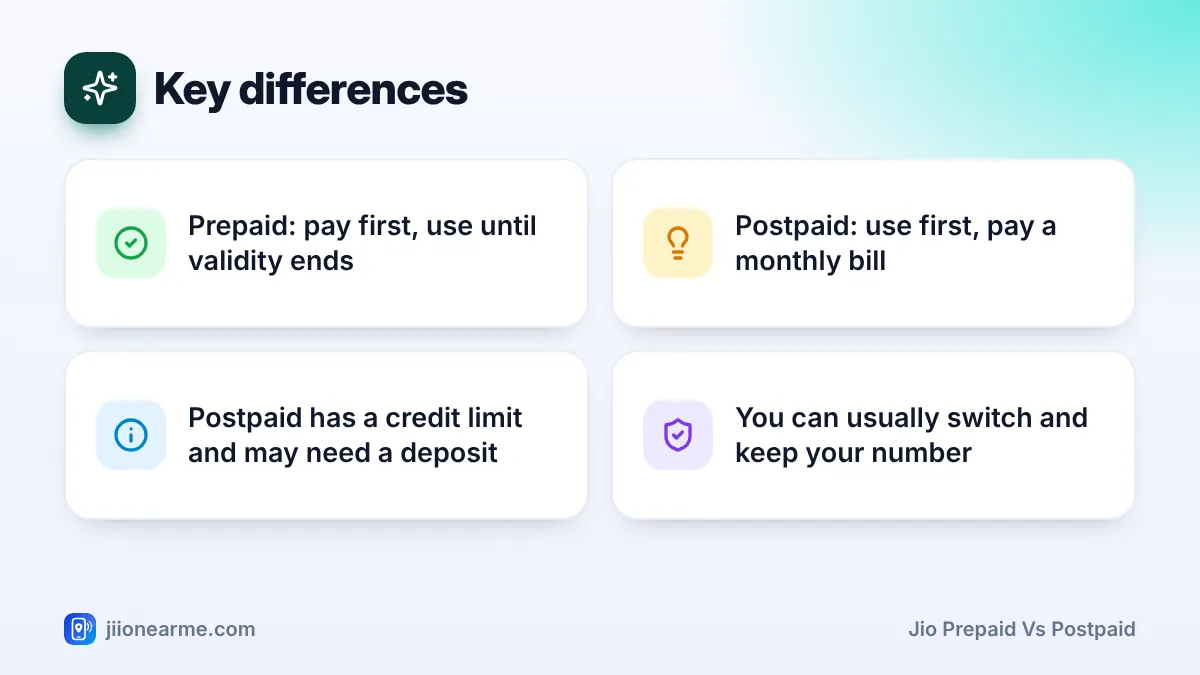
- Prepaid means paying before use, with a fixed validity for each recharge.
- Postpaid means using first and paying a monthly bill, with no recharge expiry.
- Postpaid has a credit limit and may need a refundable security deposit.
- Prepaid gives tighter spending control, while postpaid offers convenience and family plans.
- You can usually switch between the two while keeping the same number.
How Jio Prepaid Works
With a Jio prepaid connection, you choose a plan and pay for it upfront. The plan gives you a set amount of data, calls and SMS for a fixed validity period. When the validity ends or the benefits run out, you recharge again.
Prepaid suits people who like to know exactly what they are spending. You can recharge through the MyJio app, the Jio website, UPI apps or a retailer. There is no bill, no credit check and usually no deposit.
How Jio Postpaid Works
With Jio postpaid, you pick a monthly plan and use services during the billing cycle. At the end of the cycle, you receive a bill. You pay it by the due date through MyJio, jio.com, UPI or autopay.
Jio’s postpaid service is called JioPlus. It includes individual plans and family plans, where one primary holder pays a single bill for a few linked numbers. Postpaid works on credit, so each account has a credit limit and may need a refundable security deposit.
Jio Prepaid vs Postpaid: Side-by-Side Comparison
| Feature | Prepaid | Postpaid (JioPlus) |
|---|---|---|
| When you pay | Before use, by recharging | After use, through a monthly bill |
| Validity | Ends after the plan period | Runs by billing cycle, no recharge expiry |
| Credit limit | Not applicable | Yes, set for each account |
| Security deposit | Usually not needed | May apply, depending on plan and eligibility |
| Bill | No bill, only recharge receipts | Monthly bill, can be downloaded as PDF |
| Extra usage | Needs a new pack or recharge | Charged on the next bill |
| Family plans | Separate recharges for each number | Family plans with one combined bill |
| Spending control | Very high, fixed upfront | Good, but extras can raise the bill |
Payment, Validity and Credit Limits
Paying before vs after
On prepaid, you cannot spend more than you have paid for, unless you buy another pack. On postpaid, you spend first and pay later, so the bill reflects what you actually used in that cycle.
Validity and service breaks
Prepaid plans expire. If you forget to recharge, outgoing services and data can stop. Postpaid has no recharge expiry, so service continues as long as you pay your bills on time and stay within the credit limit.
Credit limit on postpaid
Every postpaid account has a credit limit. If your usage charges cross it before the bill is paid, some services may be restricted. You can check your credit limit and unbilled usage in the MyJio app.
A postpaid bill can include charges for international roaming, premium services and usage beyond plan limits. Check the unbilled usage in MyJio during the month to avoid surprises.
Deposits, Documents and Billing
Both prepaid and postpaid connections need KYC with a valid ID. The difference is what comes after.
- Deposit: Postpaid may need a refundable security deposit, depending on the plan, your payment method and eligibility. Prepaid usually does not.
- Bills: Postpaid gives you a monthly bill that you can download from MyJio or jio.com. Some people use it for office reimbursement or records.
- Receipts: Prepaid gives you recharge receipts, which work for simple personal records.
Switching later is possible
Your choice is not permanent. Jio lets you move a number from prepaid to postpaid, and back again, through official routes such as MyJio, jio.com or a Jio Store. Before switching, keep in mind that unused prepaid benefits may not carry over, and postpaid dues must be cleared before moving back to prepaid.
Deposit rules and credit limits can change. Before moving to postpaid, check the current details in MyJio, on jio.com or at a Jio Store.
Control Over Spending
If you want strict control, prepaid is hard to beat. You decide each recharge, and nothing is charged beyond it. When your data runs out, you choose whether to buy more or wait.
Postpaid gives you more freedom during the month, which is useful but needs a little attention. The plan charge is usually steady, but extras can push the bill up without you noticing until it arrives.
Postpaid can still be well controlled with a few habits:
- Check unbilled usage in MyJio every week or two.
- Turn on bill and usage alerts where available.
- Set up autopay to avoid late payment charges.
- Buy international roaming packs before travelling instead of paying standard roaming rates.
If a postpaid bill is not paid by the due date, a late payment charge may apply and services may be restricted. Autopay through MyJio or a UPI mandate helps you never miss a date.
Which Should You Choose?
Prepaid often suits you if:
- You want fixed, predictable spending.
- You are a student or on a tight budget.
- You do not want a deposit or credit limit.
- You use your phone mostly on Wi-Fi and need little mobile data.
Postpaid often suits you if:
- You keep forgetting to recharge.
- You want one bill for your family through JioPlus.
- You need a monthly bill for work reimbursement.
- You travel abroad and want roaming handled on your bill.
Consider two simple examples. A college student who mostly uses campus Wi-Fi and wants a fixed monthly budget may be happier on prepaid. A working parent who pays for a spouse and two children, and who keeps forgetting recharge dates, may find a JioPlus family plan much easier.
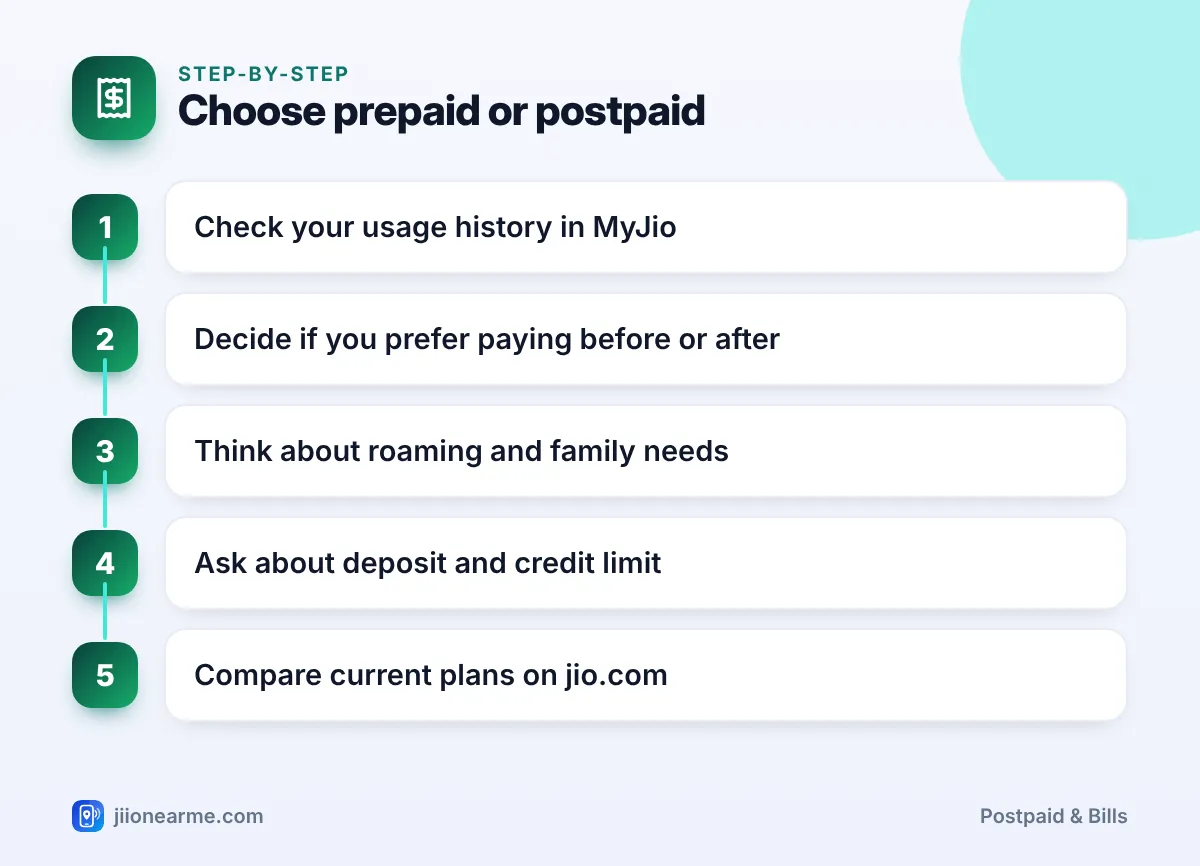
To decide, follow these steps:
- Check your usage history in the MyJio app for the last few months.
- Decide how you prefer to pay: before use or after.
- Think about roaming and family needs.
- Ask about deposit and credit limit for postpaid.
- Compare the current plans in MyJio or on jio.com.
Frequently Asked Questions
Can I switch from Jio prepaid to postpaid without changing my number?
Yes. Jio lets you convert your number from prepaid to postpaid through official routes such as the MyJio app, jio.com or a Jio Store.
Is postpaid more expensive than prepaid on Jio?
Not necessarily. It depends on the plans available and how you use them. Compare current prepaid and postpaid plans against your real usage.
Does Jio True 5G work on both prepaid and postpaid?
Jio True 5G is available on both, as long as your plan, phone and area are eligible. Check eligibility in the MyJio app.
Can I go back to prepaid after trying postpaid?
Usually yes. You can request a switch back to prepaid after clearing any dues, and you keep your number.
Which is better for elderly parents?
Postpaid can help because there is no recharge expiry and you can pay their bill remotely. Prepaid works well if they prefer full control over their own spending.
Conclusion
Jio prepaid vs postpaid comes down to how you like to pay. Prepaid gives fixed, upfront spending. Postpaid gives convenience, no recharge expiry and family plans, with a credit limit and possibly a deposit.
Look at your real usage in MyJio, compare current plans, and pick the option that fits your habits. If you have questions about your number, call 199 from your Jio phone.
JIo Near me is an independent guide and is not affiliated with Reliance Jio. App menus, plans and policies can change – always confirm current details in the official MyJio app or on jio.com. We will never ask for your OTP, PIN or passwords.