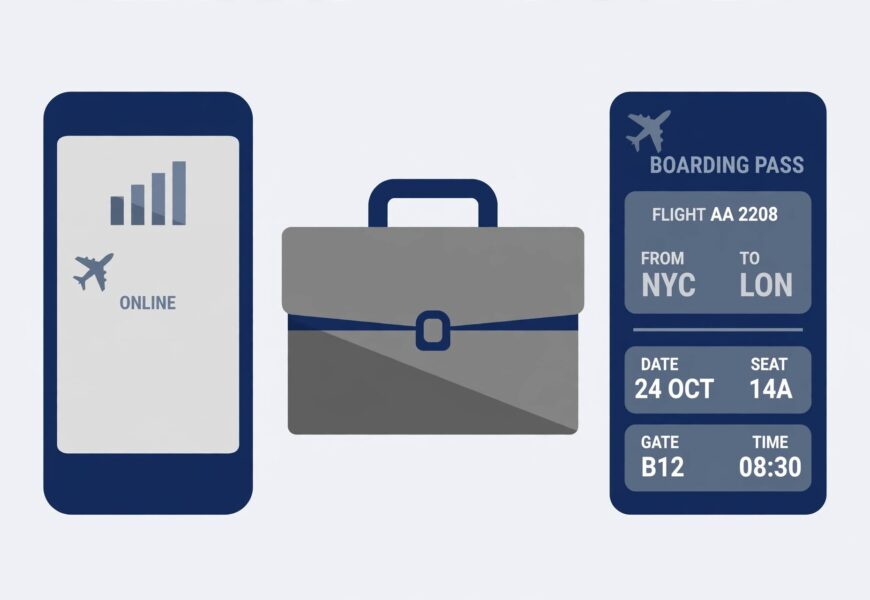
Business trips to India run on tight schedules — back-to-back meetings, client calls that can’t be rescheduled, and often very little downtime to troubleshoot a connectivity problem. If you’re traveling for work, your eSIM setup for India needs to prioritize speed and reliability over the budget-conscious approach a leisure tourist might take. This guide covers what business travelers specifically need to get right.
Why Business Travel Has Different Priorities
Unlike a leisure tourist who can shrug off a slow connection at a beach café, a business traveler landing for back-to-back client meetings needs data working the moment they clear immigration — for calendar syncs, last-minute email checks, and navigation to the first meeting. The margin for error is much smaller.
Setting Up Before You Fly
The single biggest mistake business travelers make is waiting to sort out connectivity after landing. Instead:
- Purchase and install your eSIM at least a day before departure, while on reliable home or office Wi-Fi
- Test that the profile installed correctly (most eSIM apps show an “installed” or “ready” status even before you activate data)
- Confirm your phone’s dual-SIM settings are configured so your home number stays active for calls while the India eSIM handles data
- Note your provider’s support contact method in advance — a business trip is not the time to be searching for customer support links mid-crisis
Our step-by-step activation guide covers the full technical setup process if you’re doing this for the first time.
Airport Priorities for Business Travelers
If you’re landing at Delhi, Mumbai, or Bangalore for a business trip, the priority sequence after clearing immigration is: confirm data is active, check email/calendar for any last-minute changes, and get your ground transport sorted — ideally all within the first few minutes after landing, since a business itinerary often has a car or driver waiting with a tight schedule. Our Delhi Airport eSIM guide covers exactly what to expect if Delhi is your entry point.
Reliability Over Price
For leisure trips, price-per-GB is often the deciding factor. For business trips, it usually shouldn’t be. A slightly more expensive plan with better network partnership and dedicated support is generally worth it when a dropped connection could mean missing a client call. When comparing options, our best eSIM for India comparison highlights which providers prioritize reliability and support responsiveness, not just headline pricing.
Choosing the Right Network for Business Travel
Business trips are typically concentrated in major metro areas — Delhi, Mumbai, Bangalore, Hyderabad, Chennai, Pune — where all three major Indian carriers (Airtel, Jio, Vi) perform well. Jio’s strong 4G/5G speeds in these cities make it a solid default choice for video calls and large file transfers between meetings, while Airtel offers a reputation for consistent enterprise-grade reliability. See our Airtel vs Jio vs Vi comparison for a deeper look if your itinerary includes a wider mix of cities.
Hotel Wi-Fi vs Mobile Data for Meetings
Don’t assume hotel or conference venue Wi-Fi will be reliable enough for an important video call — many business travelers have learned this the hard way during a critical presentation. A well-provisioned eSIM with strong local network coverage can serve as a more dependable backup than unfamiliar venue Wi-Fi, especially for hotspot-tethering a laptop during a call if the venue’s network drops.
Data Volume for a Typical Business Trip
Business trips (typically 3–10 days) usually involve less recreational browsing than leisure trips but more email, video calls, document sharing, and navigation between meetings. A 10–20GB plan is generally sufficient for a week-long business trip with regular video calls and document uploads; heavier users (frequent large file transfers, extensive hotspot use) should size up. Our India eSIM pricing guide covers exact costs across this range.
Visa Requirements for Business Travel
Business travelers to India typically need an e-Business Visa rather than a standard tourist e-Visa, which has different documentation requirements and validity terms. This is handled entirely separately from your eSIM purchase, so confirm your visa category and requirements on the official Indian e-Visa government portal well before your trip — using unofficial third-party visa sites is a common scam risk worth avoiding.
Expense Reporting and Receipts
Unlike leisure travelers, business travelers often need to submit expense reports for connectivity costs. Choose a provider that emails a clear purchase receipt or invoice at checkout — most reputable eSIM providers, including JiionEarMe, provide this automatically, but it’s worth confirming before purchase if your company requires a specific invoice format.
Frequently Asked Questions
Should business travelers buy a higher-priced eSIM plan over a cheaper option?
Generally yes — reliability and support responsiveness matter more for business trips than saving a few dollars on a budget plan.
Can I keep my home number active for calls while using an India eSIM for data?
Yes, most modern smartphones support dual SIM (physical home SIM + eSIM), letting you receive calls and OTPs on your regular number while using local data.
What visa do business travelers need for India?
Most business travelers require an e-Business Visa rather than a tourist e-Visa — check the official government e-Visa portal for current requirements before applying.
