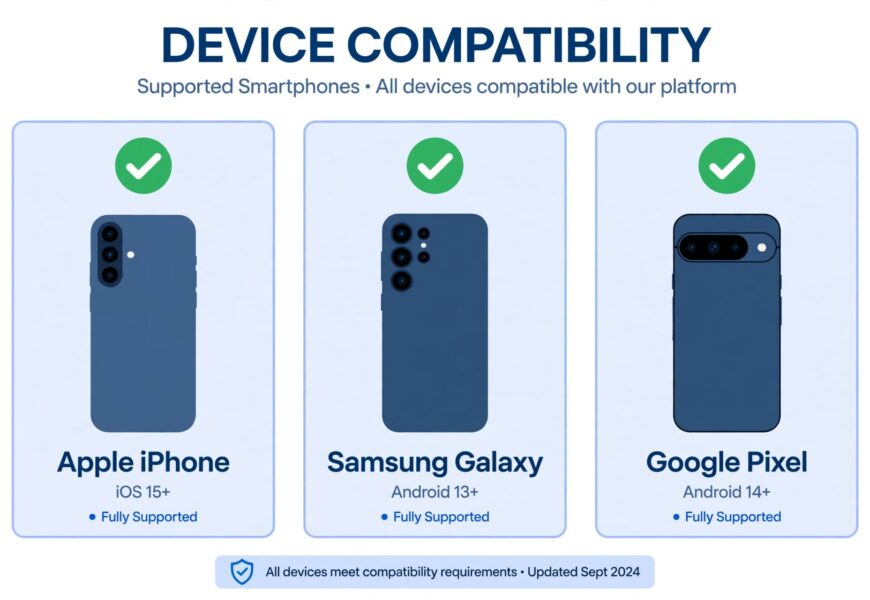
Before you buy any India travel eSIM, there’s one question that matters more than price or coverage: is your phone even eSIM compatible? Buying a plan for a device that can’t use it is the single most avoidable mistake tourists make. This guide gives you a full, up-to-date device compatibility list so you can check in under a minute.
Why This Matters Before You Buy
eSIM support depends on both your phone’s hardware and the specific regional or carrier version of that model. Two people with the “same” phone model bought in different countries can have different eSIM support — this is especially true for devices originally sold in mainland China, where eSIM is often disabled or unavailable. Confirming compatibility before purchasing avoids a frustrating situation where you’ve already paid for a plan you can’t install. Once you’ve confirmed compatibility, our step-by-step activation guide walks you through the setup itself.
iPhone eSIM Compatibility
Apple has supported eSIM since 2018, starting with the iPhone XS, XS Max, and XR. Every iPhone released since then supports eSIM, including:
- iPhone XS, XS Max, XR
- iPhone 11 series (11, 11 Pro, 11 Pro Max)
- iPhone 12 series (12 mini, 12, 12 Pro, 12 Pro Max)
- iPhone 13 series (13 mini, 13, 13 Pro, 13 Pro Max)
- iPhone SE (2nd generation and later)
- iPhone 14 series (14, 14 Plus, 14 Pro, 14 Pro Max) — U.S. models are eSIM-only, with no physical SIM tray
- iPhone 15 series (all variants)
- iPhone 16 series (all variants, including 16e)
- iPhone 17 series and iPhone Air — the iPhone Air is eSIM-only globally
Important exception: iPhones purchased in mainland China generally do not support eSIM, with very limited exceptions on the newest models. If you bought your iPhone in China but plan to travel elsewhere, check Apple’s official list of eSIM-supported devices and carriers to confirm your specific unit.
Samsung Galaxy eSIM Compatibility
Samsung’s eSIM support is concentrated in its flagship and foldable lines:
- Galaxy S Series: S20 and later (S20, S21, S22, S23, S24, and newer), including Plus and Ultra variants
- Galaxy Z Series: All Z Fold and Z Flip models, including the original Galaxy Fold
- Galaxy Note Series: Note 20 and Note 20 Ultra
- Galaxy A Series: Select newer mid-range models (such as A54, A55, A56) — availability varies significantly by region
Important exception: Samsung devices sold in South Korea, mainland China, and Hong Kong frequently ship without eSIM support, even for models that support it elsewhere. You can verify your exact model’s compatibility through Samsung’s official eSIM compatibility checker, which lets you look up your specific device.
Google Pixel eSIM Compatibility
Google has included eSIM support since the Pixel 2, making Pixel one of the most consistently eSIM-friendly Android lines:
- Pixel 2 and later (Pixel 2, 3, 3a, 4, 4a, 5, 6, 6a, 7, 7a, 8, 8a, 9, and newer)
- Pixel Fold models
- Newer Pixel models (7 and later) support dual eSIM, letting you run two eSIM profiles simultaneously without needing a physical SIM at all
Other Android Brands
eSIM support varies more widely across other manufacturers:
- Motorola: Select newer models (Razr foldables and select Edge series)
- OnePlus: Select newer flagship models (check individual model specs, as support has been inconsistent)
- Oppo, Vivo, Xiaomi: eSIM support is limited and highly region-dependent — many models sold in Asian markets, including India itself, lack eSIM support even on otherwise flagship-tier hardware
If your phone isn’t listed here, the safest approach is to check your device settings directly: go to your SIM or network settings menu and look for any option mentioning “Add eSIM” or “Download SIM.” If that option doesn’t appear at all, your device likely doesn’t support the feature.
Tablets and Other Devices
eSIM isn’t limited to phones. If you’re planning to use a cellular-enabled iPad or Android tablet as a secondary device while traveling, most iPad Pro (M4 and later) and iPad Air (M2 and later) models are eSIM-only, and many Samsung Galaxy Tab S-series tablets support eSIM as well.
Quick Compatibility Checklist
Before purchasing an India tourist eSIM, confirm:
- Your device model appears on the compatible list above
- Your device was not purchased in mainland China (unless it’s a recent model with confirmed support)
- Your phone is unlocked — a carrier-locked phone may block eSIM installation from a different provider even on compatible hardware
- Your software is updated to the latest available version
What If My Phone Isn’t Compatible?
If your device doesn’t support eSIM, you’re not out of options — a physical SIM card remains fully available for tourists in India, though it comes with more setup steps. Our comparison of eSIM vs physical SIM in India explains what to expect from the physical SIM route, including documentation requirements.
Frequently Asked Questions
How do I know for sure if my specific phone supports eSIM without checking a list?
Go to Settings > Cellular (iPhone) or Settings > Network & Internet > SIMs (Android) and look for an “Add eSIM” or “Download a SIM” option. If it’s missing, your device doesn’t support eSIM.
Can a carrier-locked phone use a different eSIM provider?
Usually not. Carrier locks typically block eSIM profiles from providers other than the original carrier, even on eSIM-capable hardware. Confirm your phone is unlocked before purchasing.
Do eSIM-compatible phones bought in India work with the same eSIM technology as phones bought elsewhere?
Yes, eSIM follows a single global GSMA specification, so compatibility depends on the device model and region restrictions, not on where you plan to use it.
